
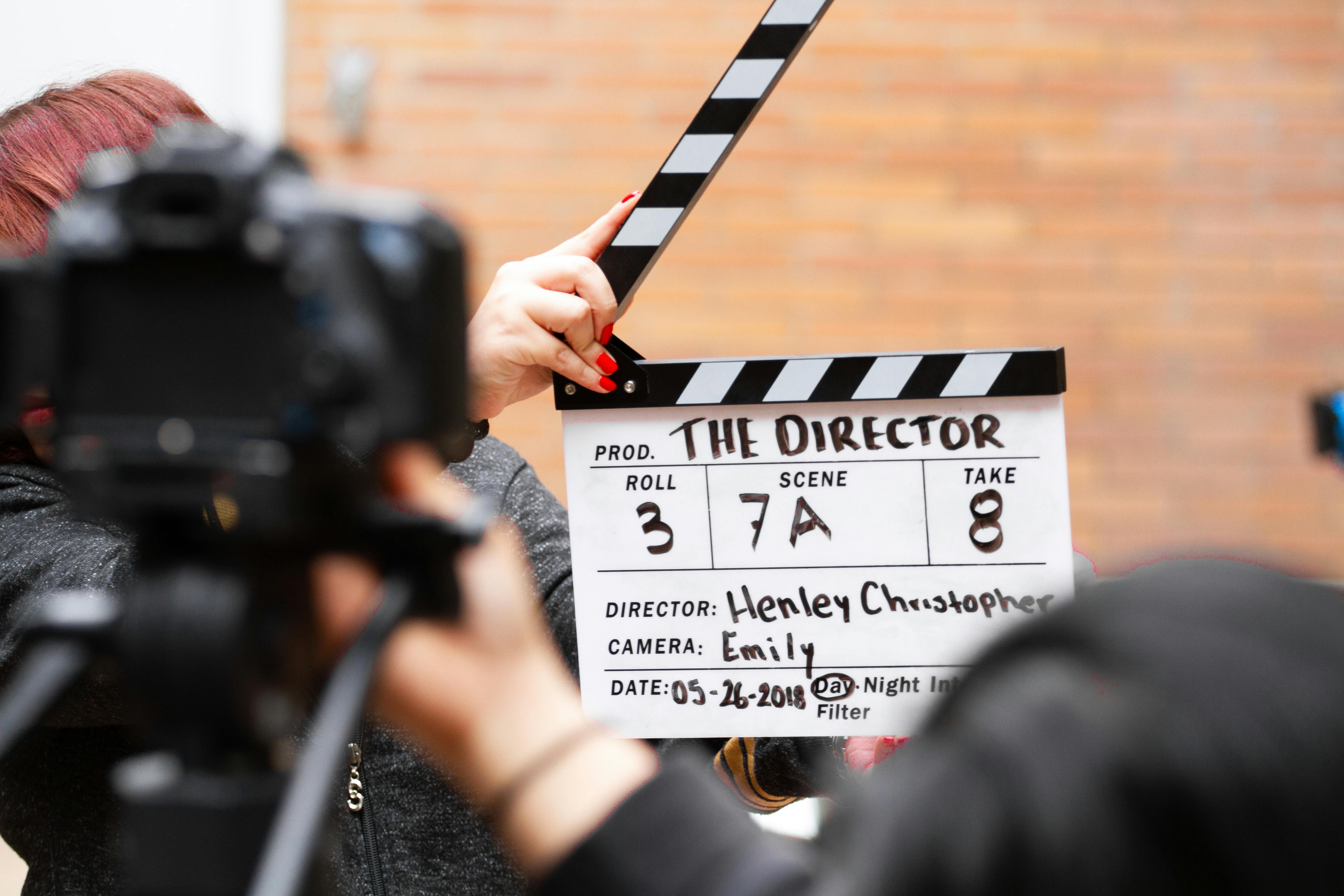
When I look back on my very first videos, part of me wants to scream at past Daniella, “STOP MOVING SO MUCH!” “Move Slower!” “Don’t Move at all!!” But hopefully by now you have learned that wobbly cam and bad audio are the top channel killers.
Once you learn to steady and slow down your camera movements, there’s an entire new level to camera use that can have an incredible impact on your storytelling. Tricks that can add a feeling of “balance” or intentionally cause your audience to feel one feeling or another.
Since I don’t know what level you are at (reply to this email and tell me!….. Right now, tell me), I’m going to start out with some basics to get you started, and get into it the deeper, storytelling bits towards the end.
Music & sound effects for creators. No copyright issues.
$6.99/month
✅ Unlimited downloads
✅ 100% catalog access
✅ Safelist up to 3 YouTube channels
✅ For individual creators & micro organizations
✅ Premium tracks & sound effects

The Basics.
- When panning, turn your body towards the direction you will start the pan, and avoid long shots.
- Be very slow when you pan or tilt! Fast pans can make your audience feel sick.
- Use the Rule of Thirds – Divide the picture into three equal parts vertically and horizontally. The most significant part of the picture should be where the lines intersect. Make sure the subject is looking across the long part of the frame (aka “looking room”)
- Place your subject in the center of the frame when you are trying to establish them as an authority.
- SLOW DOWN with your camera movements and LEARN TO PAUSE before recording.
- Check for and remove distractions in the background.
- Make sure horizon lines are above or below your subjects head.
- Observe where the light is, how it’s impacting the subject and where our attention goes.
- Avoid situations where the subject is darker than the background.
- Don’t use Zoom-in and Zoom-out while recording!!
- Try to have as much distance between the subject and the objects in the background to add depth to your shots.
- At the most basic level, start scenes with a wide shot that shows the scene setting; move to a medium shot to show the action; and use close-ups to show the “description” of the shot (e.g. a cup of tea in the morning, facial expression of happiness).
- SLOW DOWN with your camera movements and LEARN TO PAUSE before recording (Literally the best thing you can do to improve your video quality and reduce editing time).
More Advanced.
Alright you smart smart people. You made it to the advanced section! Well done! Seriously though, once you get passed the basics, one of the best ways you can start improving the quality of your videos over time is to deep dive into visual storytelling. Here I will focus on two elements: Composition & Camera Movement.
Composition refers to the way the various elements of a scene are arranged within a shot. Camera movement is when the camera is moved to change what is in that frame.
Distance from Camera
Distance from the camera can be used to show intimacy with a subject or to show its importance. The closer you are to the subject, the more intimacy and / or importance, and vice versa.
You’ll remember from my last newsletter that I said I’m going sailing with a new captain. When I first meet this captain, the first few scenes could have some distance between me and him (probably naturally) because I don’t know him, but that will change to be more close-up shots as the passage progresses and we gain familiarity. I know the other crew intimately, so the shots of them will be physically closer.
Camera Angle
Camera angle can have the impact of showing the power of the subject. For example, it’s a bit intimidating being paid crew with a new captain, so I will aim to keep the camera looking up at him to show him in a position of power. The other crew, I will show at eye level to show we are equals. If we are in any danger or have any fear, I will show everyone with the camera looking down on them, to give the impression that they are “small” or “afraid”. Then, as the problem seems more and more solvable, I will change the camera angle to be eye-to-eye or even looking up at them as we gain our confidence.
Rule of Thirds versus Center Frame
Shots of the captain talking will be with him in the center frame to demonstrate authority, whereas the rest of us will be using the rule of thirds since we are equals / comparatively unimportant.
Composition Tells a Story
Composition requires heaps of study and practice, but these are some of the most important ones to help you tell a better story. What I often see in the YouTuber sphere is when the composition generates an emotion that directly conflicts with the tone of a scene. For example, when someone is saying they are afraid of sea conditions while the camera is pointing up at them and they are center frame.
I encourage you make a regular study of composition and learn to pause to consider it. Just writing this newsletter and thinking through my upcoming sail will have such an impact on how I film the experience.
This is a good place to start learning composition.
Camera Movement
Similar to composition, camera movement can have a massive impact on your storytelling and where your audience directs their attention. I will go through a few examples of camera movements you should keep in your back pocket, but again, I recommend studying camera movement using this resource as a start.
Change in Movement
At the most basic level, handheld, shaky, fast movements inject high emotions and tension whereas slow steady or even still movements inject peace and calm. However, let’s imagine a scenario where you have a reliable engine. The camera is steady as you turn the key to start her up. But it doesn’t start. You try again. Still doesn’t start. As the scene progresses, you go from steady shots to shots with more movement, showing the building tension. Here, the change in camera movement is what tells the story.
Push In Shots
Push in shots are when you slowly push the camera towards the subject to highlight a detail or emotion of a scene. For example, let’s say the captain has to make a decision about whether or not to leave on a risky weather window. While he is deciding, I might start slowly pushing the camera in to emphasize his thought process. Or we might have big waves coming and I’m feeling seasick and worried. The camera might slowly push into my eyes to show the depth of my worry.
Pull Out Shots
Pull outs have the opposite effect of taking the attention away or making something feel less relevant. One of the crew could give their opinion that we shouldn’t leave on the passage that the captain has decided to leave on, and I could do a pull out on that crew member to show that their opinion has not been the deciding factor. Or I could be seasick and unable to eat, so I could slowly pull away from the food to show it’s not important at the moment.
No Movement
Yes, every camera movement has a meaning, but also no movement can also have a meaning. In the Adventure YouTube world, no movement in the camera is most important when you want to establish slow pacing OR when there is a lot of action taking place to which you want the audience to pay attention. No movement is especially important when the words being spoken must be heard in order for the story to progress.
Show, Don’t Tell
One of the best rules of film that I have heard repeated is “Show, Don’t Tell.”
To tell someone something is to say, “I am so worried about the weather forecast that is coming.” Its a statement, a fact.
To show someone something on the other hand is to show the details of that worry. To show the body language and physical actions, such as pacing back and forth, head in hands, head shaking no, sweaty palms rubbing together, drinking lots of water because of dry throat.
Telling is: I love sailing!
Showing is: Me at the bow, big smile on face, hands outstretched!
Telling is: That was a hard sail.
Showing is: Sweat dripping and deep breaths while grinding winch, grabbing shoulder to show exertion on muscles, deep sighs and full relaxation into cushions afterwards.
Telling is: Sailing is peaceful
Showing is: Me reading a book, sipping tea, looking out over the water, eyes gently closing while I relax on the bow.
Action
Exercise 1: Every emotion expresses itself through body language, dialogue or actions. In the moment, ask yourself:
- What do I feel right now? OR What do I want the audience to feel?
- What body language, actions, or dialogue (but non-explicit dialogue that isn’t TELLING) would emphasize the emotion of this moment?
- Record physical reactions close up: Make the eyes or hands the entire frame.
Exercise 2:
- Write several “to tell” statements that you may encounter in your videos and consider how you can prove these statements (such as I’m nervous, I’m excited). How can you see or hear that someone is nervous or excited? What actions would someone take or dialogue they would say out loud?
- Write down two or three actions or sensory details that show rather than tell.


